Charter Confusion: Why Booking a Bareboat in South Florida Isn’t What You Think

If you’re browsing for a boat trip in Palm Beach County, you’ll quickly find a dizzying array of options: private charters, yacht rentals, bareboat agreements, and more. On the surface, they all promise the same thing—a beautiful day on the water. But what many people don’t realize is that how you book can have major legal and safety implications.
While most guests simply want to relax, the line between Commercial Charter and Bareboat Charter is more than just paperwork—it’s the difference between a fully legal, professionally operated experience and potentially running afoul of federal regulations without knowing it.
Today, we’re breaking down exactly what a Bareboat Charter really is, how it differs from a Commercial Charter, and why this matters to you as a passenger.
What Is a Commercial Charter?
In the simplest terms, a Commercial Charter is when you pay to step aboard a vessel operated by a licensed professional. The captain and crew are part of the package, and you’re considered a passenger—just as you would be on a tour bus or an airplane.
Commercial charters are divided into two main types:
Uninspected Passenger Vessel (UPV) – Often called a “6-Pack”
UPV Vessel Examination Decal

Limited to six paying passengers maximum
Operated by a captain holding a USCG Merchant Mariner Credential
Must meet strict safety and equipment standards
This is how Sandhill Charters operates. Our trips are fully regulated, insured, and conducted by a Master-licensed captain. Guests can relax knowing the vessel is maintained and operated to professional standards. Many online outfits in Palm Beach County, do not take this extra step in offering peace of mind for passengers or may not be in FULL compliance of the law and avoid the voluntary inspection all together.
Inspected Passenger Vessel
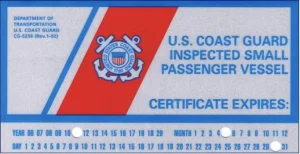
Certified to carry more than six passengers
Subject to rigorous Coast Guard inspections and annual certifications
Complies with advanced safety, fire suppression, and stability regulations
Look for These Decals
Before you step aboard any vessel, take a moment to look for official USCG decals. The blue and red Certificate of Inspection (COI) sticker means the boat is inspected and certified to carry more than six passengers under strict safety regulations. The green Uninspected Passenger Vessel (UPV) Examination decal shows the vessel meets voluntary Coast Guard safety standards for charters carrying up to six paying passengers. If you don’t see either of these displayed prominently, ask questions—legitimate operators are always willing to show proof of compliance.
What Is a Bareboat (Demise) Charter?
A Bareboat Charter sounds luxurious—like renting a private yacht—but legally, it is entirely different:
-
You are taking over full possession and responsibility of the vessel.
-
You become the owner for the duration of the agreement.
-
You must supply your own crew (who work for you and report to you, not the vessel owner).
-
You are responsible for fuel, provisions, navigation, and legal compliance.
On paper, a Bareboat Charter is a purely recreational use. In practice, many companies improperly market trips as “bareboat charters” while still selecting the captain, bundling fuel and crew fees, or retaining operational control—all of which are prohibited by law.
The Problem: Illegal Charters Are Everywhere
In South Florida, the USCG has repeatedly cracked down on vessels operating as “bareboat” without following the letter of the law. Why? Because too often:
❌ The owner still dictates who the captain will be (but is allowed to supply a list of insurance approved operators to choose from, providing they are true independent contractors and have no owner’s interest at stake)
❌The vessel owner, owner’s spouse/family, owner’s representative or owner’s employee is on board too
❌ The trip fee includes crew, fuel, drink packages (even bottled water) and catering bundled together
❌ The charterer is treated as a passenger, not the responsible operator
When these conditions exist, the trip is a commercial charter in disguise—and if the boat isn’t properly licensed or inspected, it’s illegal.
Why Should You Care?
You might think this is just a regulatory technicality, but the stakes are very real:
⚠️ Liability – As the legal “owner,” you can be held personally responsible for accidents, injuries, or environmental damage.
⚠️ Insurance Voids – Many bareboat agreements come with insurance exclusions if the terms are violated, leaving you exposed to massive financial risk.
⚠️ Safety Concerns – Vessels operating illegally often skip crucial inspections and safety protocols, compromising passenger safety.
⚠️ Trip Disruptions – The USCG has authority to terminate unlawful charters on the spot, stranding passengers and issuing heavy fines (often exceeding $60,000).
How to Tell the Difference
Red Flags You’re Not Booking a Real Bareboat Charter:
- The company says, “Don’t worry, we’ll provide the captain.”
- The trip includes fuel and provisions without separate agreements.
- You’re not given clear operational control over the vessel.
- There’s no mention of your legal responsibility as the charterer.
- They advertise to take 7 to 12 passengers (not necessarily illegal, just a red flag and you should be asking lots of questions)
In a true bareboat, you must:
✅ Hire your own crew independently
✅ Pay fuel and operating costs directly
✅ Assume liability and legal compliance
If these conditions aren’t met, you’re not booking a Bareboat—you’re booking an unlicensed commercial charter.
Safer, Simpler Options
If you prefer a carefree experience, a Commercial Charter with a licensed operator is almost always the better—and safer—choice. When you book with Sandhill Charters, you:
✔ Enjoy a fully licensed UPV operation with a USCG Master Captain
✔ Benefit from professional safety equipment and coverage
✔ Have zero operational responsibility or liability
✔ Can focus on making memories, not managing risk
Protect Yourself Before You Book
The word “charter” might sound interchangeable with “rental” or “bareboat,” but the reality is more complex. For your safety, peace of mind, and legal protection, always verify exactly what you’re booking—and never hesitate to ask questions.
If you’d like help understanding the best options for your next adventure, we’re always glad to guide you—no obligation, no confusion.
Stay safe, stay informed, and we’ll see you on the water and remember to “Ask the Captain to See Their Credentials”
Related Article – What Is The Difference Between Boat Charter and Boat Rental?
If you suspect illegal charter operations, use the USCG CGIS reporting tool found HERE